Skip to content
Surgery Recovery

What Nobody Tells You About Sleeping After Knee, Shoulder, or Hip Surgery (Besides "Get A Recliner")

(Your surgeon gave you a position. Here's how to actually hold it for eight hours.)

Every discharge sheet mandates a sleep position. None of them come with a way to hold it. So patients improvise. Recliners, pillow forts, squishmallows, and average two hours a night.

How recovering patients actually sleep

Swipe to compare all three →

Modular Pillow
Recliner
Pillow Fort / Wedge
🌿 Holds the mandated position
All night, in your bed
Upright only, in the living room
Until you move
⚡ Adapts by recovery stage
Reconfigures in a minute
One position forever
Rebuild and re-guess
🛡 Protects the operated side
Bolsters block the roll
Gravity does the work
Nothing stops the roll
💵 Cost
HSA/FSA eligible system
Hundreds, single-purpose
Cheap and doesn't work

TLDR: Surgeons mandate a sleep position but nobody gives you a tool to hold it. The Modular Pillow builds your required setup. Elevated, offloaded, or back-only, and keeps it there all night. 👇

1. "Get A Recliner" Is Advice, Not A Plan
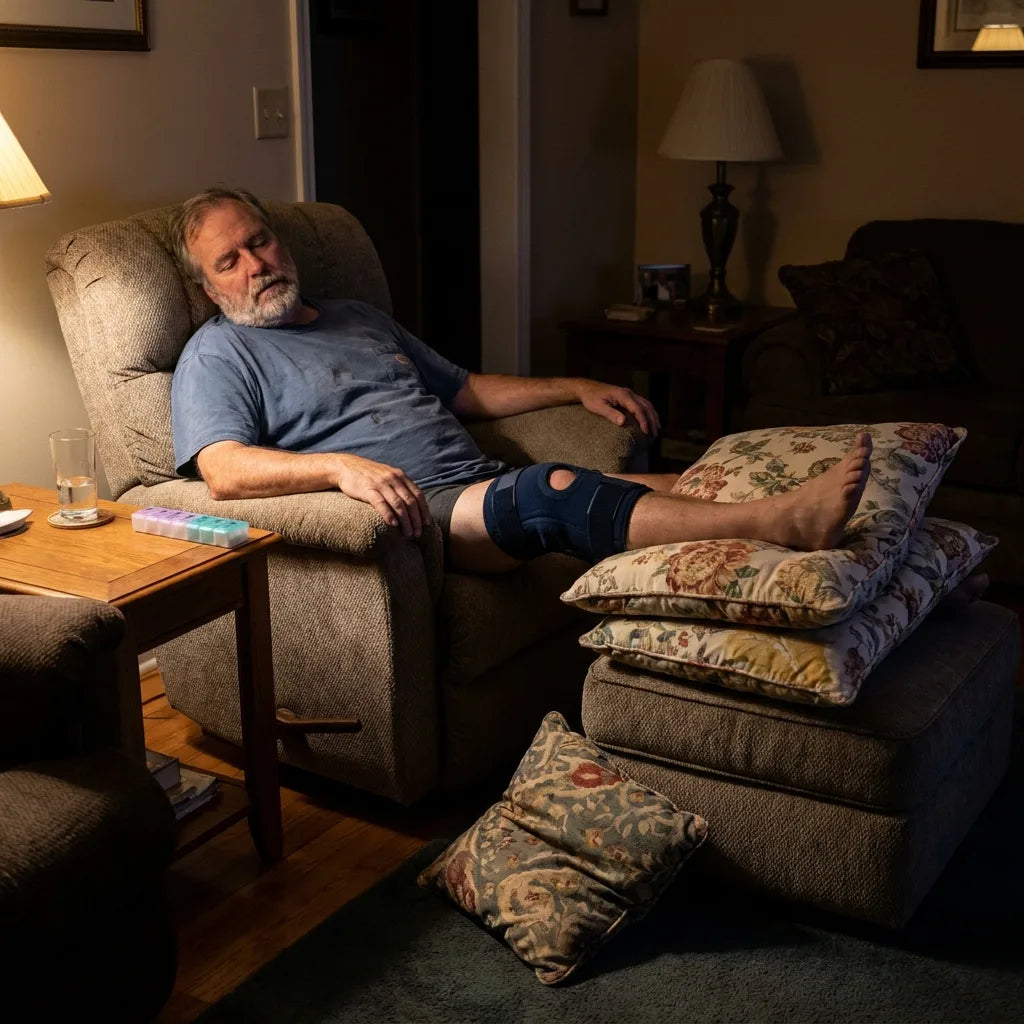
Post-op sleep improvised in a recliner with jury-rigged pillows under the braced knee

It's the #1 tip in every recovery community. Knee, hip, shoulder, because nothing else holds a position all night. But ask the people who followed it: they're still jury-rigging wedges and pillow stacks on top of the recliner at week six, because a chair holds you upright, it doesn't elevate the knee, support the arm, or block the roll. The recliner was always a workaround for a missing tool. Necessary, maybe. Sufficient, no.
2. Your Discharge Papers Said What. Nobody Said How.

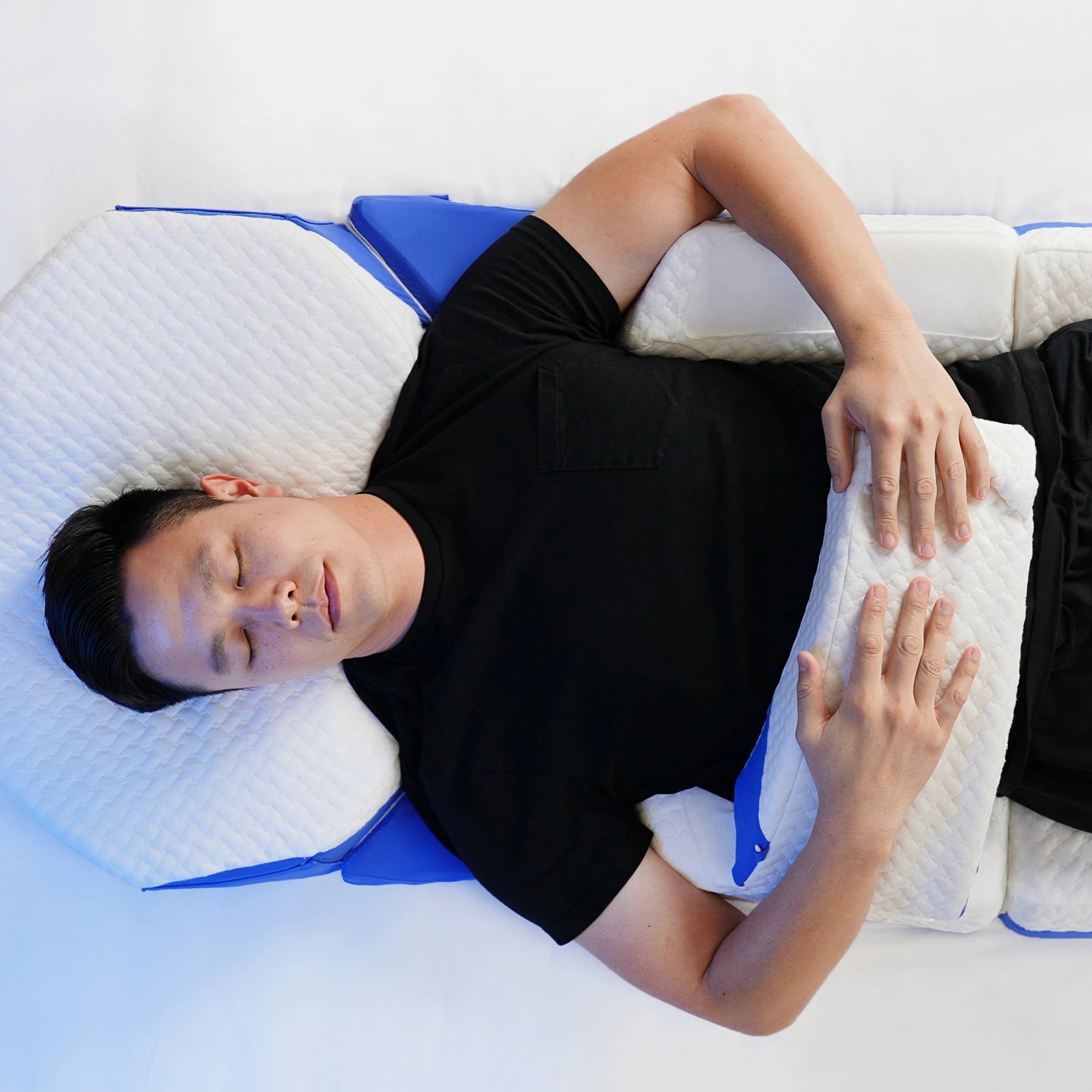
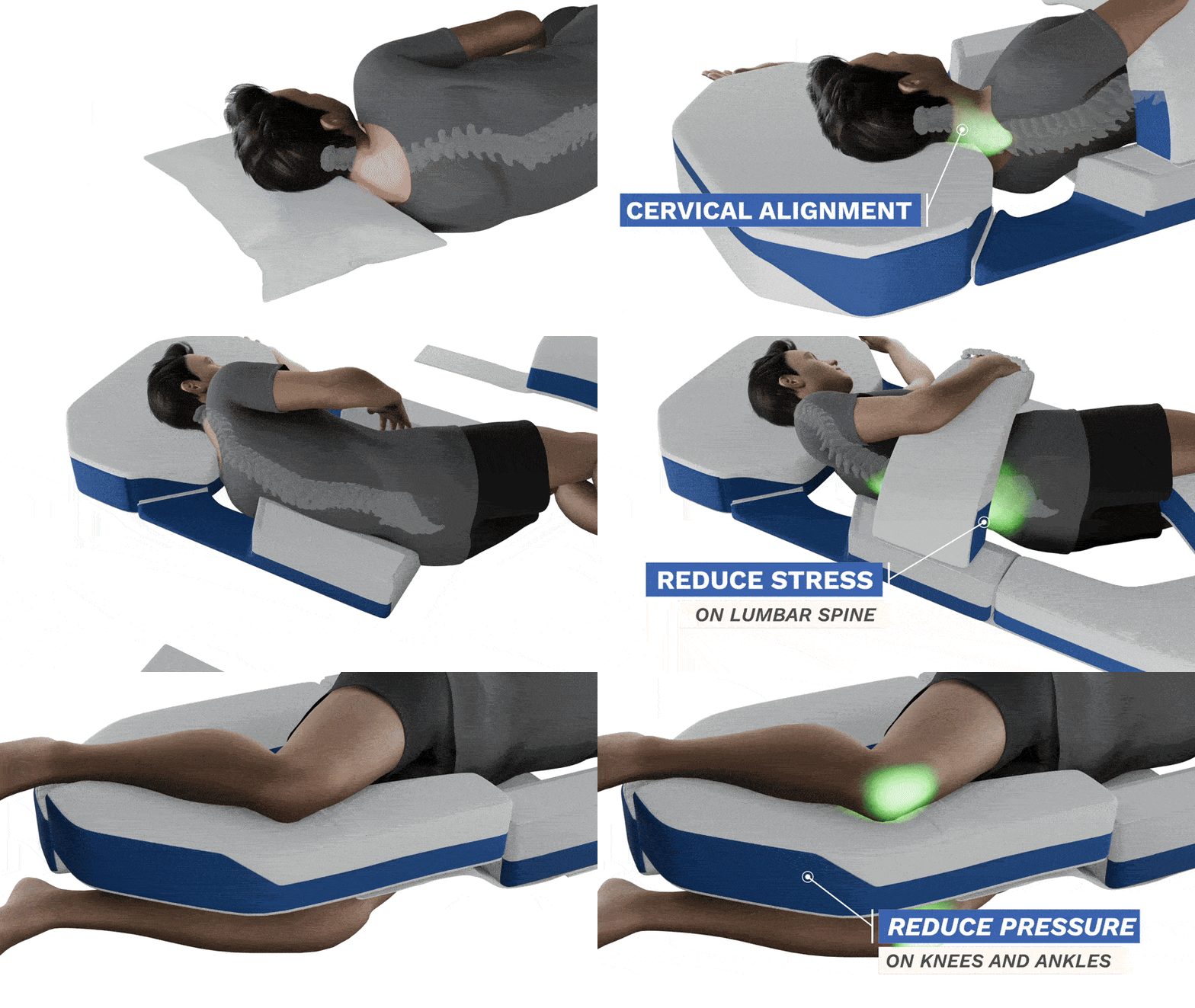
Modular Pillow full-body support zones

Lifting limits. Bending limits. "Sleep on your back only." "Keep it elevated." The daytime plan is detailed, and the eight hours you're unconscious get one line. Sleep is a third of your recovery, and it's the only part you can't consciously control. That gap is the problem this system fills.

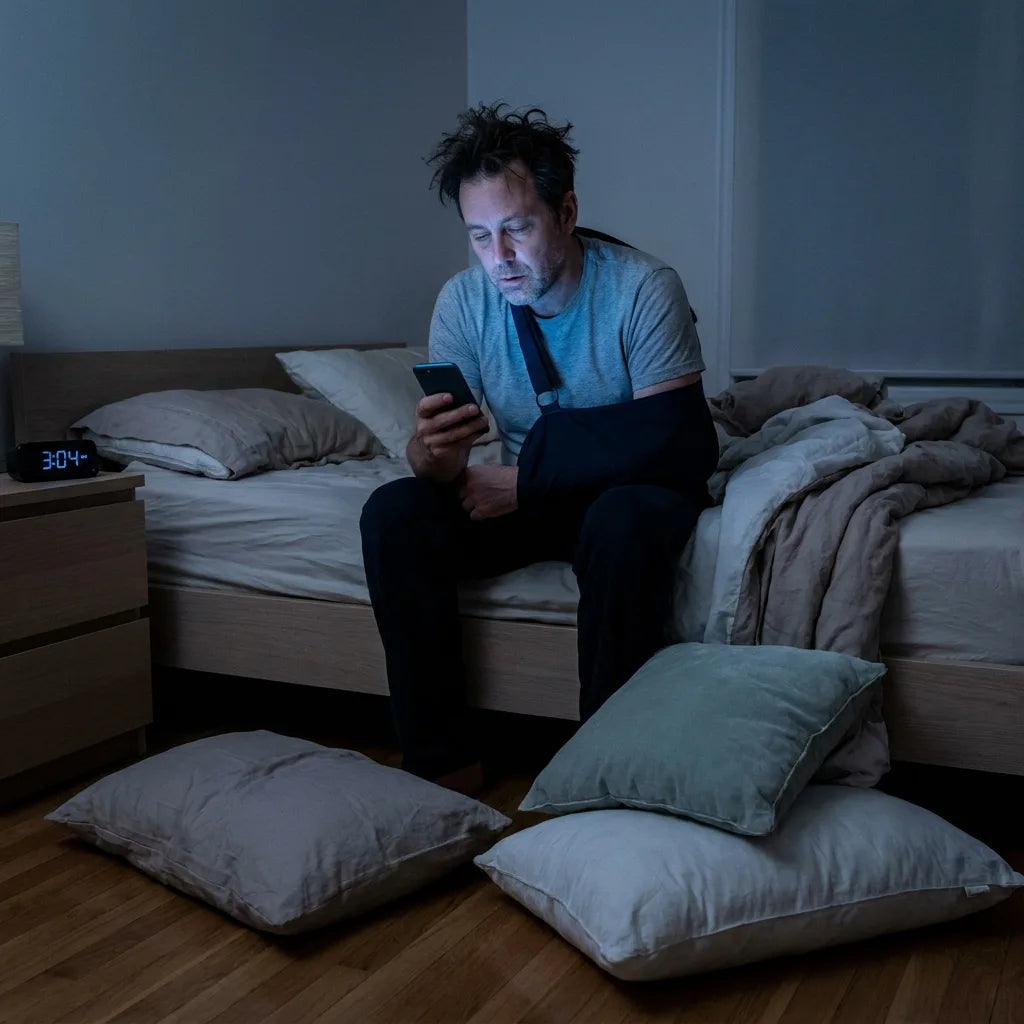
3. The Pillow Fort Collapses Exactly When You Need It

Awake at 3am in a sling after the pillow fort collapsed again

Two under the knee, one behind the back, one guarding the incision side. Twenty minutes of arranging, and the first time you shift, it's gone. Recovering patients copy their sling or brace out of loose pillows every night. The modules lock together, so the fort can't fall.

Recovery doesn't pause at night.

Try it risk-free for 120 nights

HSA/FSA eligible · 120-night at-home trial · Doctor-designed

4. Knee Surgery: Elevation That's Still There At 3am

Modular Pillow configured for supported knee elevation

After a replacement or ACL repair, the swelling peaks in weeks one to three, exactly when patients report two hours of sleep a night. Ice and elevation only work if the angle holds for hours. A supported leg channel keeps the knee elevated and straight without a slipping tower of pillows.

5. Shoulder Surgery: Offloaded, Cradled, Not Upright In A Chair

Modular Pillow configured to offload the shoulder with the arm cradled

Rotator cuff and labrum patients get sent to the recliner because lying flat lets the operated shoulder drift. The alternative: torso elevated on a supported tilt, arm cradled, hips locked so you can't roll onto the repair. The sling position. Sleepable, in a bed.

6. Hip, Mastectomy, C-Section: Back-Only Without The Bracing

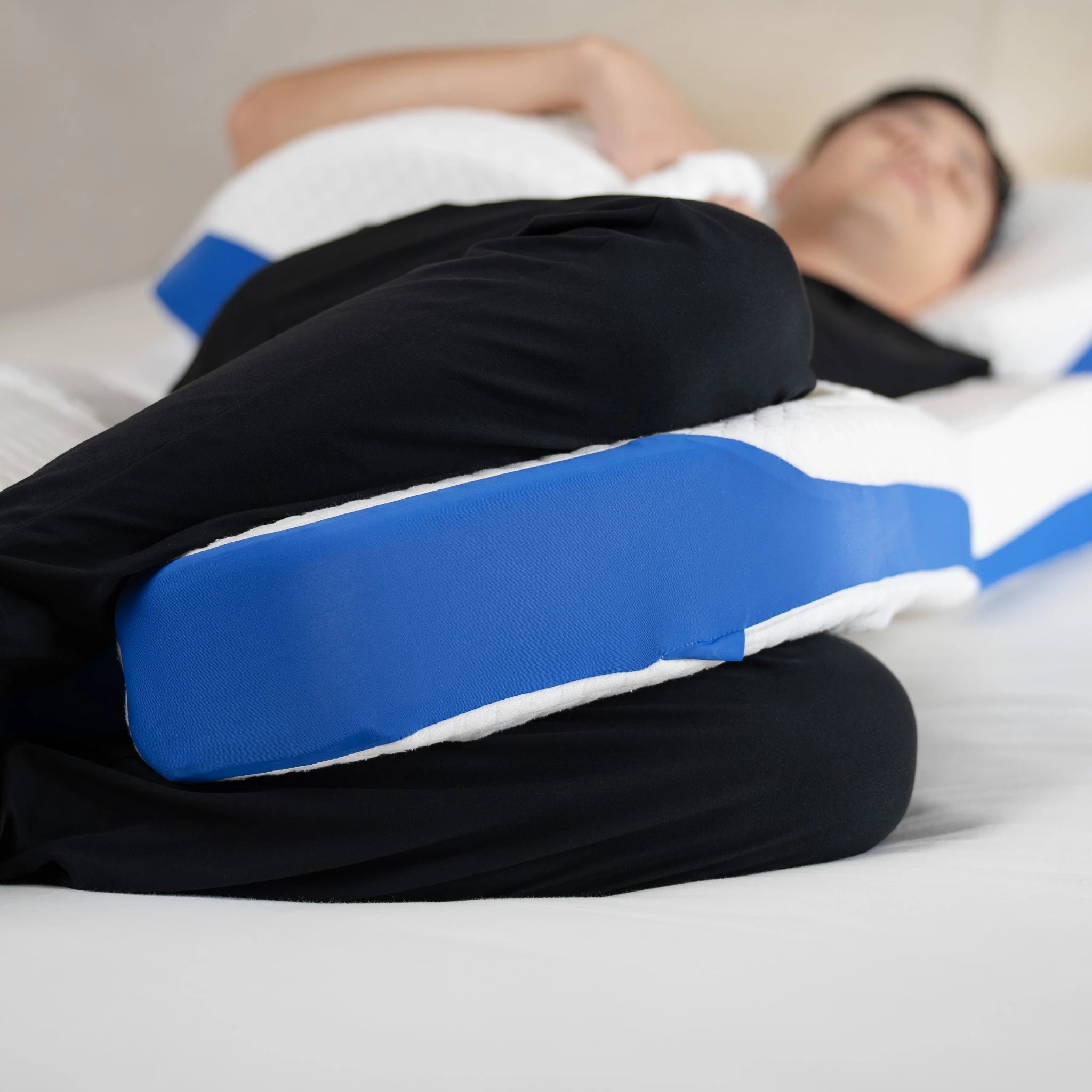
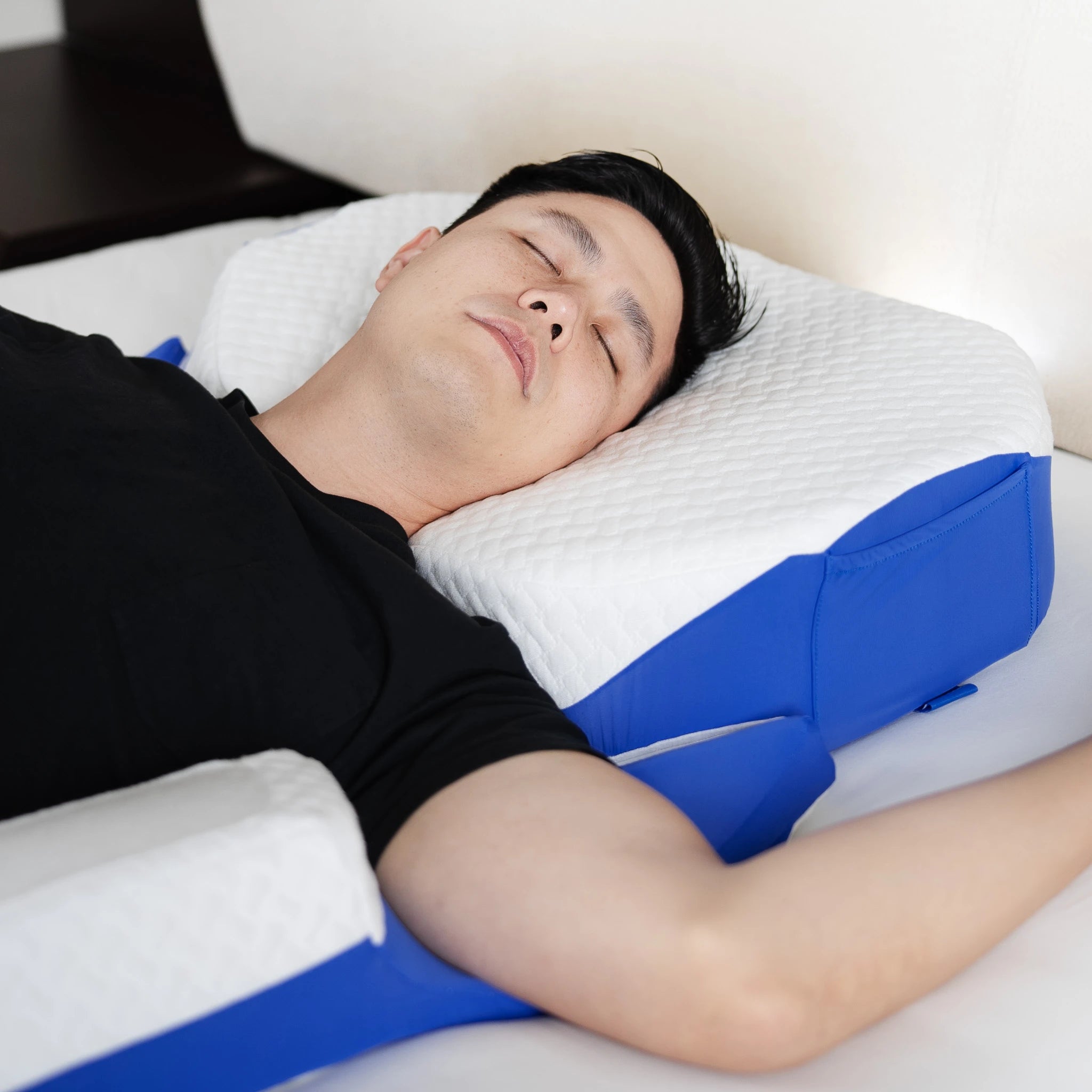
Supported back-only sleeping position held by side bolsters

"Don't sleep on that side" sounds simple until your unconscious body disagrees. Side bolsters hold a back-only position so you stop startling awake mid-roll, and stop white-knuckling the night, guarding an incision with sheer willpower.

Out of the recliner. Back in your bed.

See the Modular Pillow

120-night risk-free at-home trial · HSA/FSA eligible

7. It Changes Shape As Your Recovery Does

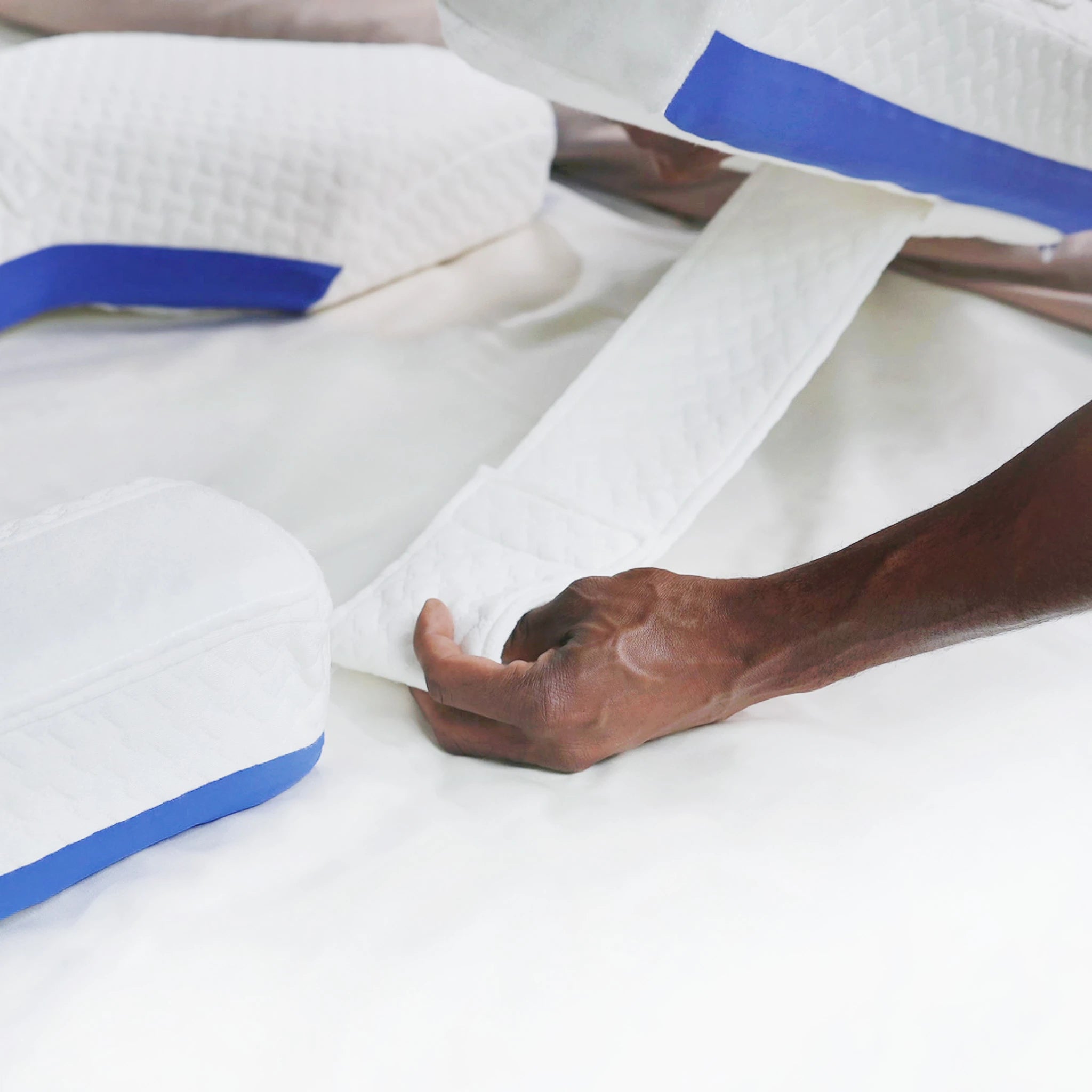
Reconfiguring the Modular Pillow as recovery stages change

Week one needs strict elevation. Week four needs side-sleep protection. Week eight, you mostly need your old sleep back. Minus the one position that still hurts. A fixed wedge does one job; a modular system reconfigures for each stage, then becomes your everyday setup.

8. Designed By A Doctor Who Treats Recovering Patients

Dr. Aaron Fu, DPT. Designer of the Modular Pillow

Dr. Aaron Fu, DPT, built the Modular Pillow around the positions recovery actually requires. Elevated, offloaded, back-only, because "how do I sleep now?" was the question his patients asked most, and a bag of throw pillows was the only answer they had.

9. HSA/FSA Eligible, Because Recovery Sleep Is Medical

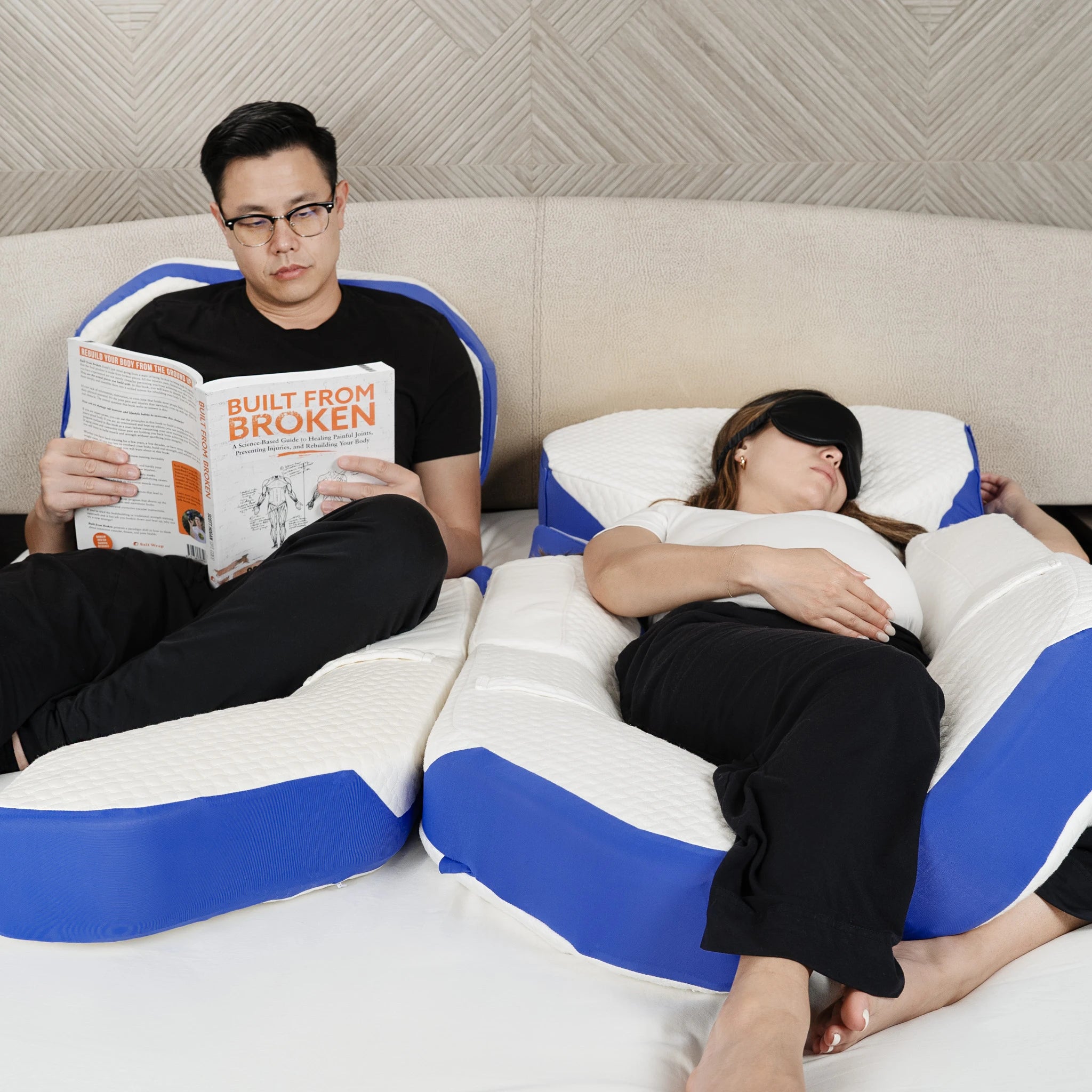
Modular Pillow on a standard bed

You wouldn't pay out of pocket for the brace, so don't for the nights either. The Modular Pillow is HSA/FSA eligible. Recovery sleep is a medical need, not a luxury, and it costs less than the recliner people buy just to survive six weeks.

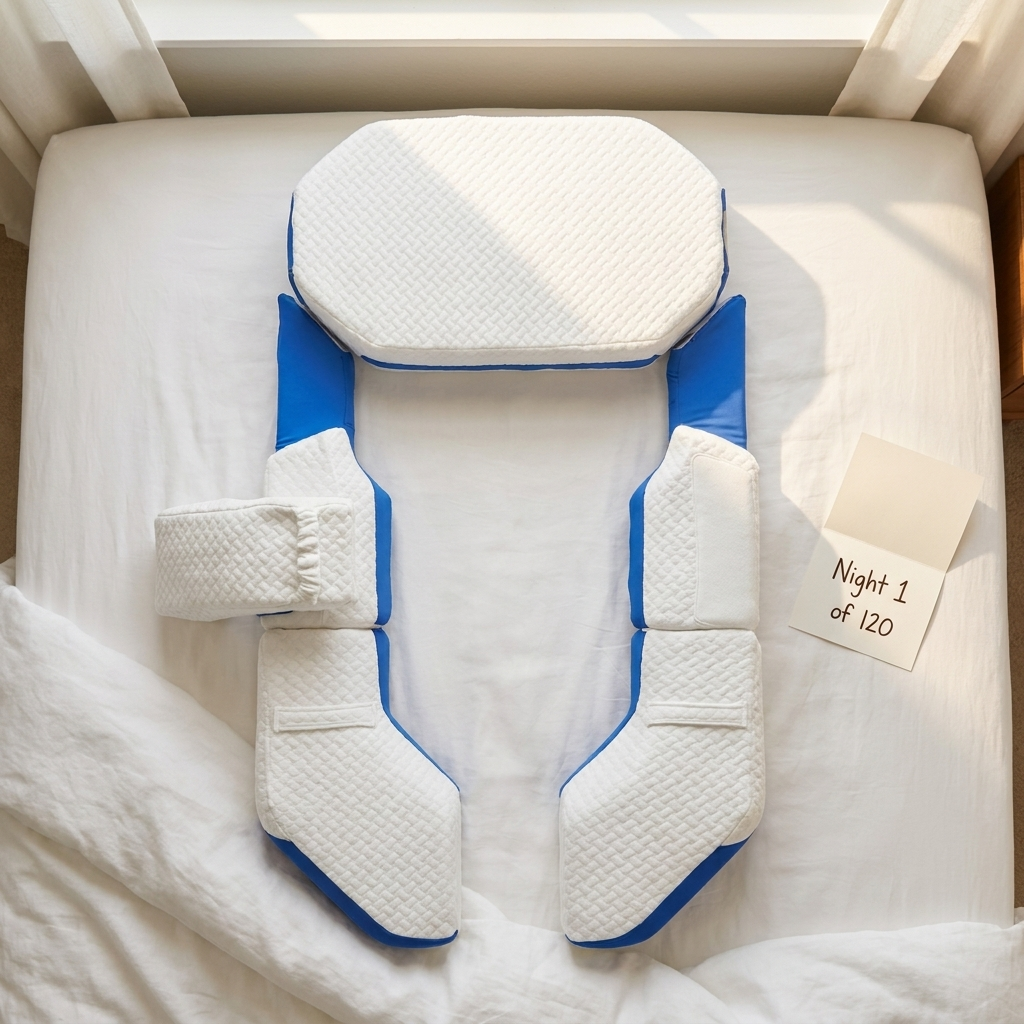
10. Pre-Op? Set It Up Before Surgery Day

Modular Pillow on a bed with a handwritten note reading Night 1 of 120, the at-home trial

The patients who sleep best in week one are the ones who came home to a setup that already worked. If surgery is on the calendar, the 120-night trial means the system is dialed in before you need it, and if your recovery somehow doesn't need it, send it back.

Sleep is a third of your recovery. Treat it like one.

Try the Modular Pillow. 120 nights

HSA/FSA eligible · 120-night risk-free at-home trial · Doctor-designed by Dr. Aaron Fu, DPT

{"statementLink":"","footerHtml":" ","consistentHelpData":[],"hideMobile":false,"hideTrigger":false,"disableBgProcess":false,"language":"en","position":"left","leadColor":"#146ff8","triggerColor":"#146ff8","triggerRadius":"50%","triggerPositionX":"right","triggerPositionY":"bottom","triggerIcon":"wheels2","triggerSize":"small","triggerOffsetX":20,"triggerOffsetY":90,"mobile":{"triggerSize":"small","triggerPositionX":"left","triggerPositionY":"bottom","triggerOffsetX":10,"triggerOffsetY":69,"triggerRadius":"50%"}}