
A Doctor Of Physical Therapy Discovers…
Sleep On Your Side Again Without Twisting The Repair
(Even If The Recliner, The Pillow Fort, And The BLT Rules Have All Failed You)

The short version
- Your surgeon told you how to sleep. Nobody gave you something to sleep on
- BLT was the only rule. The bed was never explained
- The recliner is week one's workaround. It is not the plan
- Knee and ankle pieces hold hips stacked so the twist never reaches the repair
- 120 nights at home. HSA/FSA eligible
If you had a microdiscectomy…
…or you are having one this month.
I can already describe the night.
They told you BLT.
Bend.
Lift.
Twist.
That was the whole daytime plan.
And then they sent you home with nothing for the eight hours you cannot watch yourself.
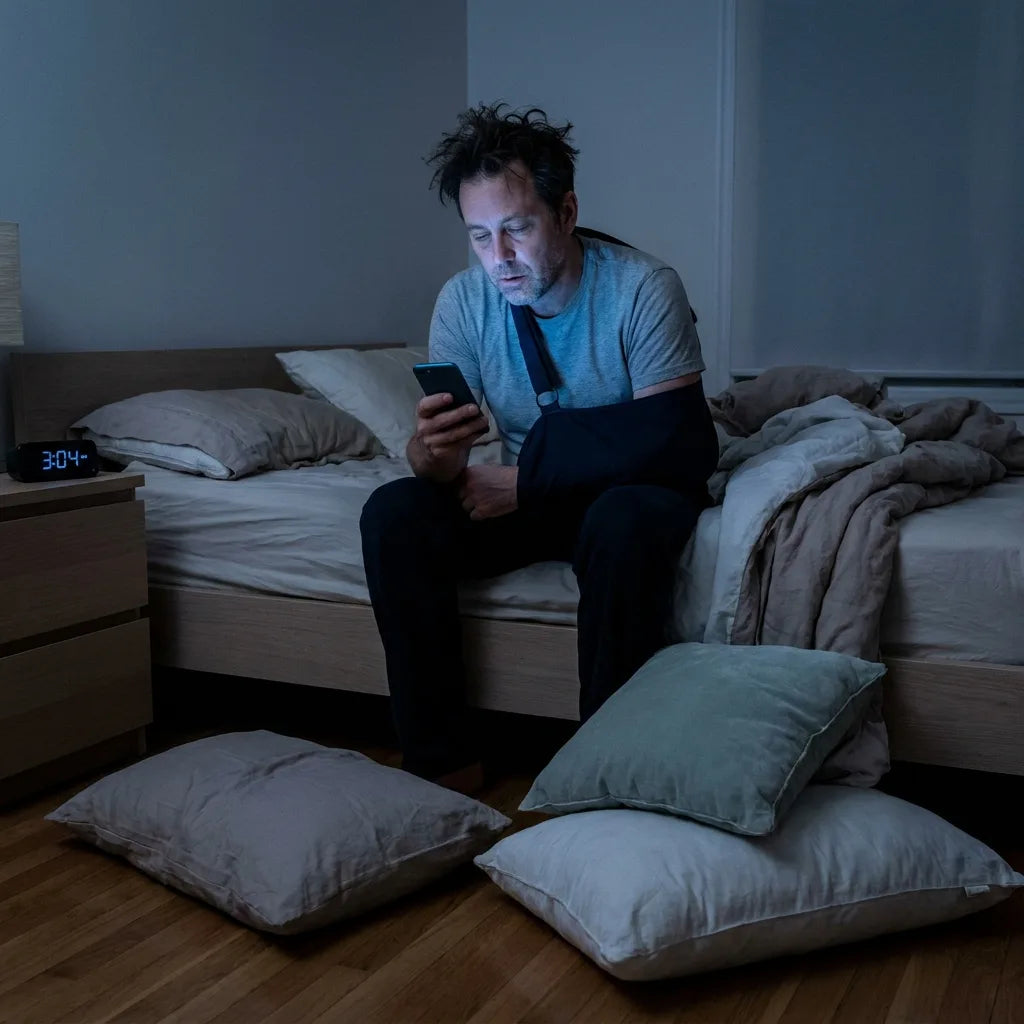
You are not failing recovery.
You were given a rule and no tool.
I see this person in clinic every week.
Surgery yesterday.
Or two years out, still one wrong move from a week on the couch.
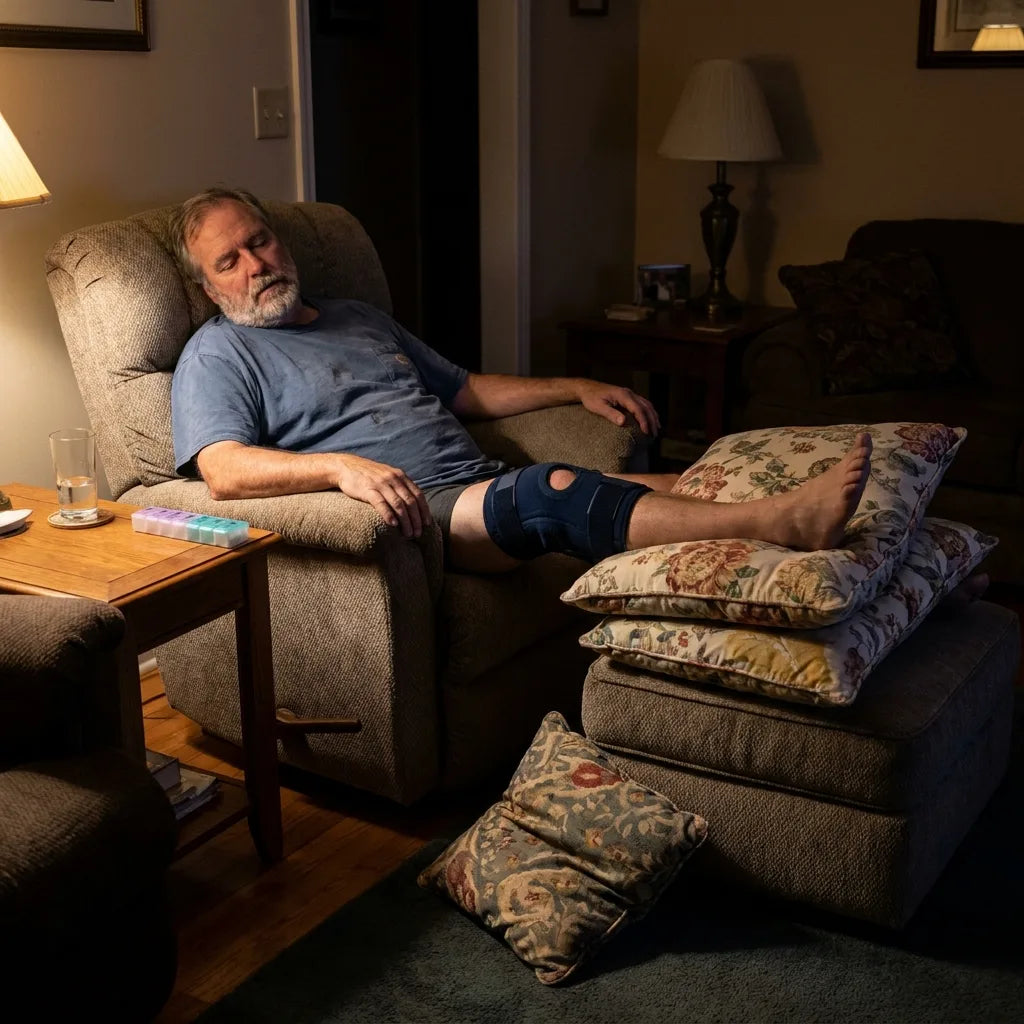
They sleep in the recliner because the bed feels unsupervised.
For years I said what every discharge packet says.
Sleep on your back.
Pillow between the knees.
Don't twist.
I was wrong to stop there.
Sleeping on your back would keep the hips from twisting.
Most people cannot do it after this surgery.
The muscles cramp them into a taco.
They roll onto their side by 2 a.m.
And the lumbar goes with the hip.
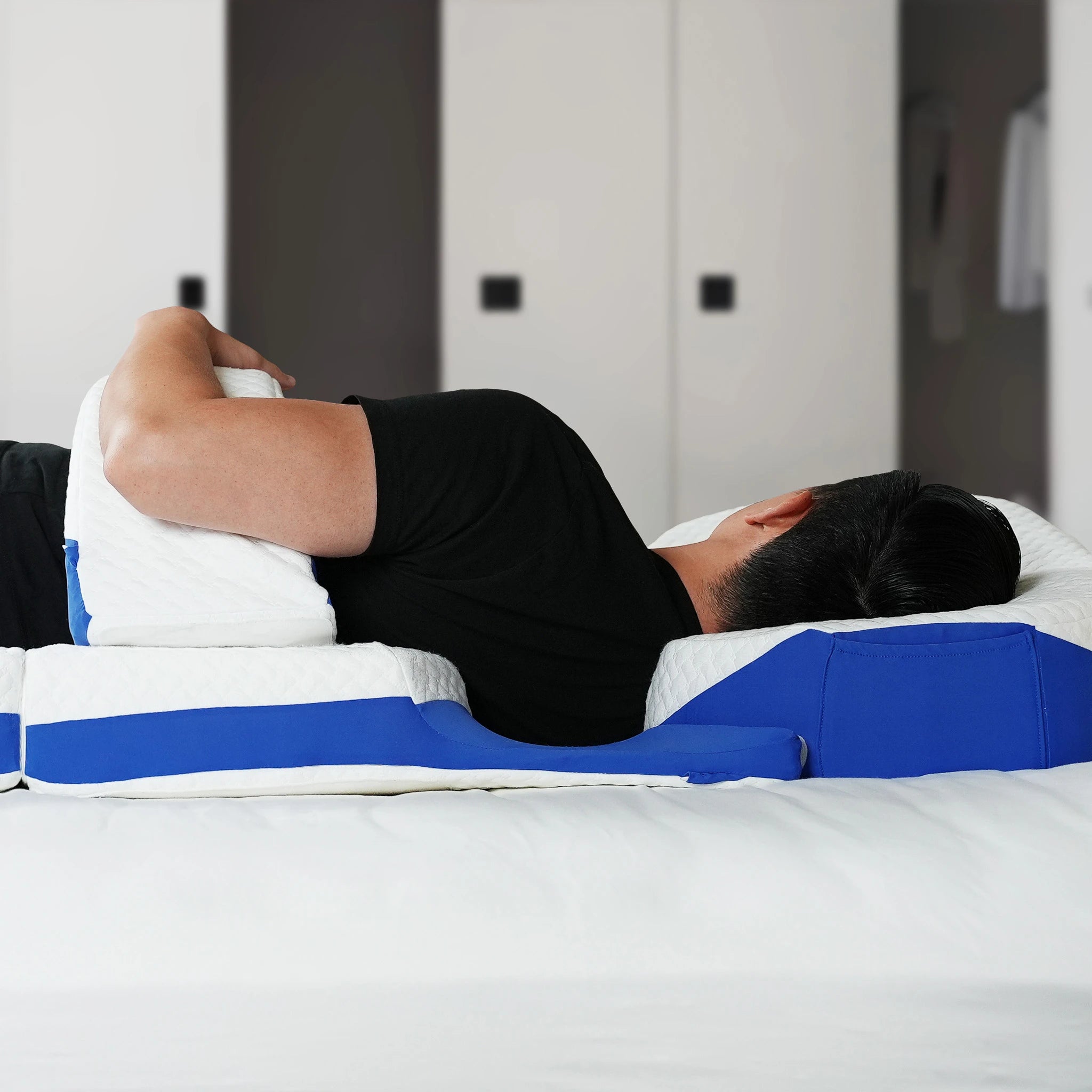
A supported side position is the way through that.
Knees apart.
Hips stacked.
So the twist cannot start.
The night is the unsupervised part of recovery
Once you see this, you cannot unsee it.
When you lie on your side, the top hip slowly rolls forward.
The lumbar follows.
That rotation is the twist they told you not to do.
Only you are asleep when it happens.
A recliner holds you upright.
It does not stack your hips.
A pillow fort holds for an hour.
Then it is on the floor.
The 3 a.m. twist is the problem.
Not the mattress.
Not willpower.
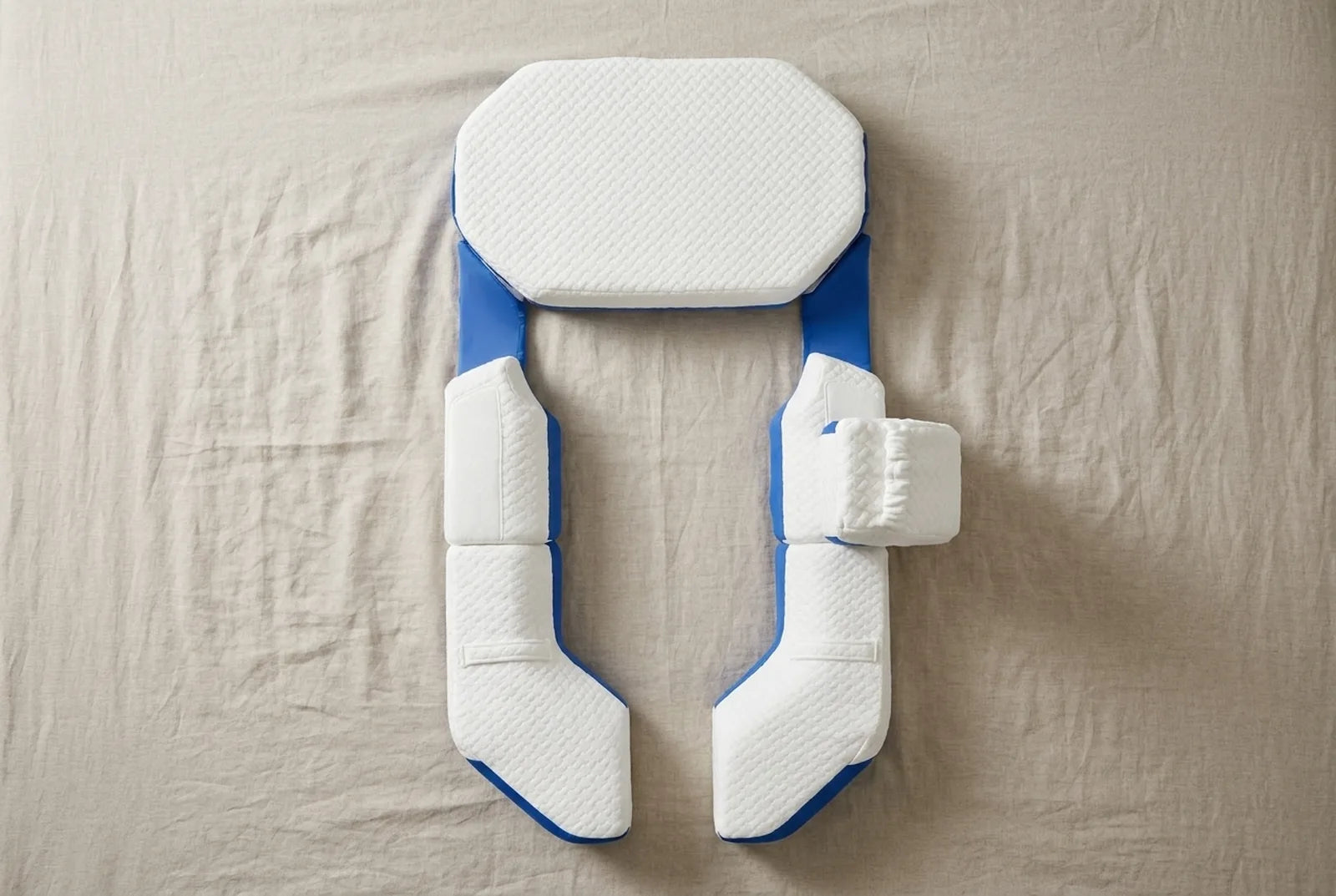
A connected system holds knees and ankles so the hips stay stacked.
The patient who was two months in a recliner
A woman in her sixties came in two months after a microdiscectomy.
The sciatica was gone.
That part had worked.
She had also been living in a recliner.
She called it her number one recovery item.
She listed the pillow stacks without being asked.
And she was scared of one roll that would send her back.
BLT was the only thing they explained. Nobody explained the bed.
That was the thing the packet had skipped.
She did not need a better chair.
She needed her hips to stay stacked while she slept.
On her side.
In her own bed.
And she needed that setup to still be there at 4 a.m.
Nothing on the market did either one.
So I built the thing that holds the position
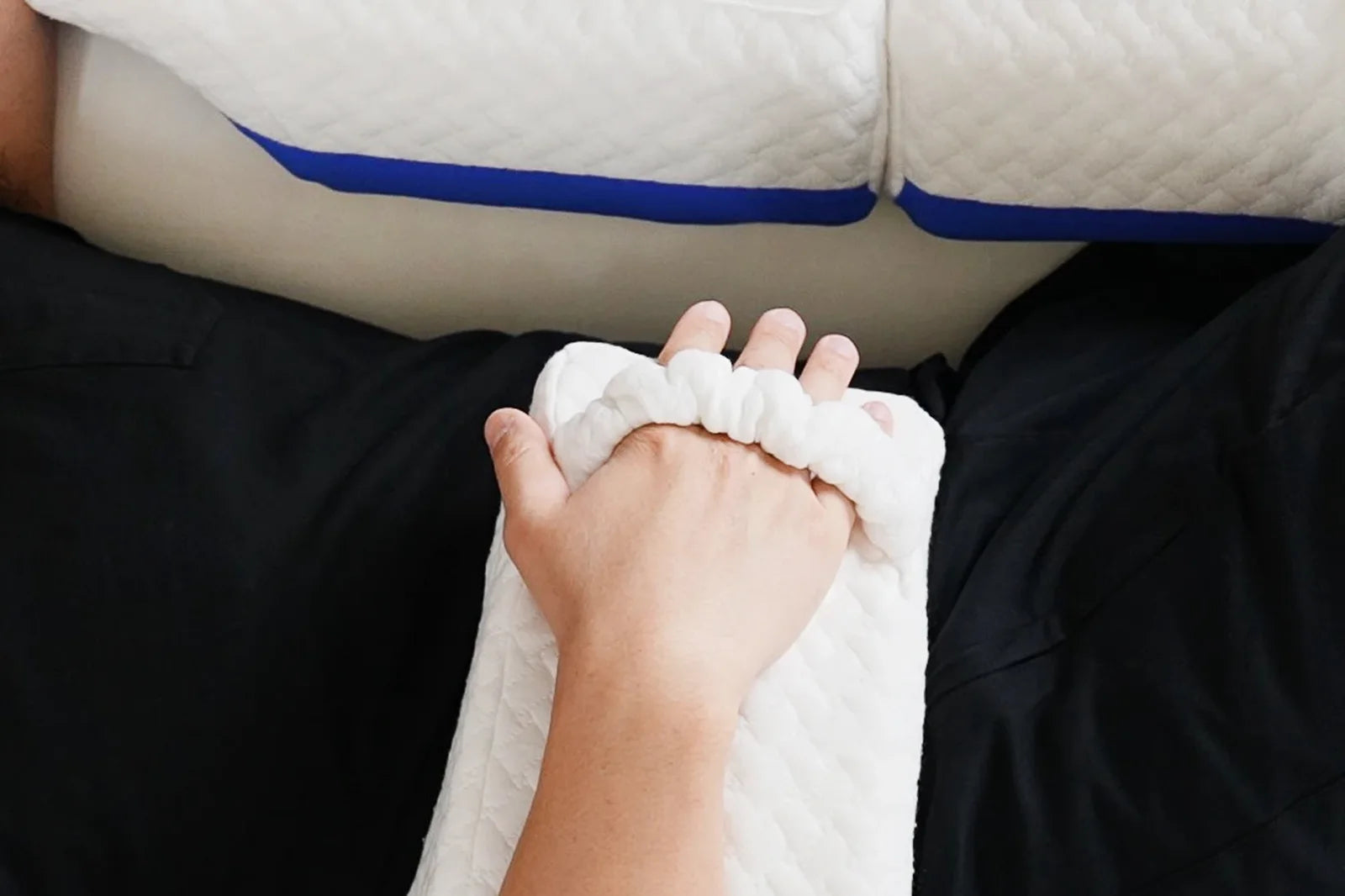
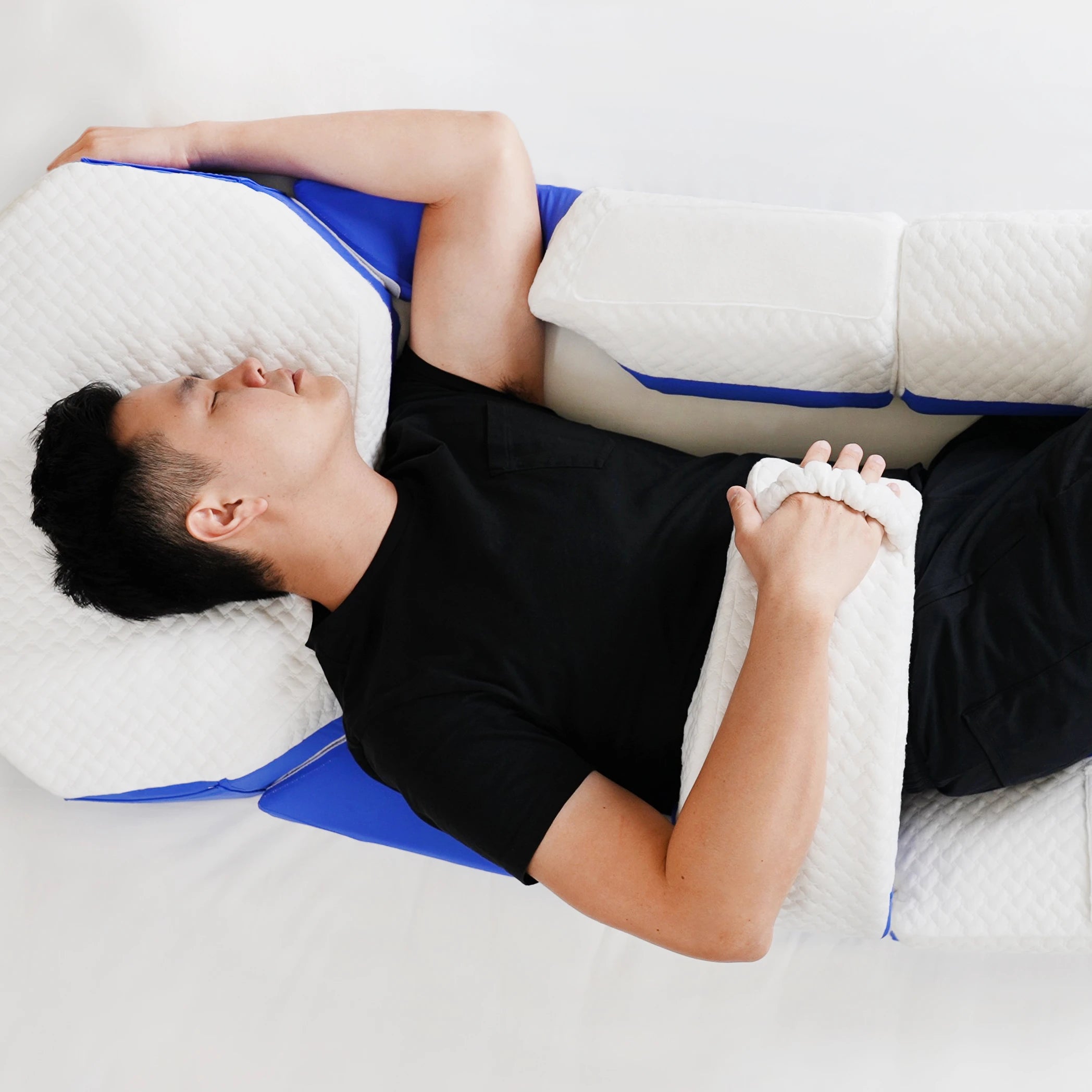
Why the recliner, the fort, and the BLT rules keep failing
| Recliner | Pillow fort / knee pillow | Modular Pillow | |
|---|---|---|---|
| Controls the position your spine holds | Upright only | Until it slides | Yes, head to ankles |
| Stops the 3 a.m. twist | Not addressed | Interrupted until it slides | Hips stacked, knees separated |
| Still in place at 3 a.m. | You are in a chair | Often on the floor | Strapped as one piece |
| Lets you side-sleep the repair | No | You try | Yes |
| Rebuild required nightly | No | Every night | No |
What my patients report (it is not the pain score)
Since putting it in patients' hands, the pattern has been the same.
And it is not the one I expected.
They rarely start with how much it hurts.
They start with the nights.
They got out of the recliner.
They stopped rebuilding the fort.
And the 3 a.m. twist did not happen.
A back that does not get yanked overnight…
…because the hips never rolled.
“20 years later”
20 years ago I had a spine injury and have been waking up in pain ever since. This keeps my spine straight and hips in place so I don’t twist at night. Huge difference in the mornings.
“Comfortable, great for sciatica”
I really like this pillow. My doc recommended it to me and while I had sticker shock, I tried anyways bc of their return period. Immediate difference in pain in my hips and sciatica. Only issue is that the covers are annoying to take on and off to wash but whatever.

“But I've tried everything.”
I hear this every day.
And I take it seriously.
By the time a person after this surgery reaches me…
…they have usually lived in a recliner and built a fort that fails.
And they can tell you what one wrong move costs.
That is exactly why it ships with a 120-night trial.
Not a two-week window.
A two-week window tells you nothing about a repair that is still settling.
Four months, at home, through the first weeks and the later ones.
If the nights disagree, send it back.
It is HSA/FSA eligible too.
The Modular Pillow®
Head to ankles. Five pieces. One connected structure. (Not another pillow.)


Sleep on it for four months. Send it back if your mornings don't agree. · HSA/FSA eligible
The questions I hear most
I just had a microdiscectomy. Can I even side-sleep yet?
That is your surgeon's call, not mine.
This does not change a restriction they wrote down.
What it does is hold the position they already asked for.
Hips stacked.
No twist.
Once they clear you for a side position, this is the tool that keeps it.
If they want you on your back only, say so and we set it that way.
This is not a treatment for a disc.
Nothing you sleep on is.
My surgeon said sleep on my back. Is this fighting that?
No.
The same modules hold a back position.
Knees supported so the lumbar stays quiet.
Most people cannot stay on their back all night after this.
The muscles cramp.
They roll.
And that unplanned roll is the twist.
A supported side setup is the backup for the night the back position fails.
Ask your own clinician which of those they want first.
The pillows never stay. Won't I just twist on this too?
Most people after this surgery flip because the position gives out.
So the flipping usually drops once the hips are held.
The system is the same on both sides.
Turning over lands you in a supported position rather than out of one.
And because it is strapped together, it moves with you instead of scattering.
That scatter is how every pillow stack fails.
How is this different from the recliner everyone told me to buy?
A recliner holds you upright.
It does not stack your hips.
And it is not your bed.
People live in one for two months because nothing else holds a position overnight.
This builds that held position in the bed you already own.
Side sleep.
Hips stacked.
So the 3 a.m. twist cannot start.
The recliner was the workaround for a missing tool.
It costs more than a pillow, and I just paid for surgery.
Add up the recliner and the fort.
Most people who come to me have already spent that.
This replaces the pile rather than joining it.
And the 120-night trial exists because I cannot promise you in advance which backs it helps.
If yours is not one of them, send it back.
It is also HSA/FSA eligible, which for a lot of my patients changes the real number.
Will it take over the bed and annoy my partner?
It takes up roughly the width of two regular pillows and stays on your side.
It is built to fit two people on a queen or larger.
In the morning the pieces stack, or you pull the covers over the whole thing.
This is the most common surprise, in both directions.
It is smaller on the bed than people expected.
And more visible than they expected when the bed is made.
Your nights have been unsupervised long enough.
Hips stacked so the twist never reaches the repair. 120 nights to find out. (Without another recliner, another pillow fort, or a weekend to judge a recovery.)
Start my 120 nightsStill mapping the night? Take the 2-minute quiz →4.8 · 832 reviews · 120-night trial · HSA/FSA eligible
References
- Based on internal clinical testing and user feedback.
This is a paid advertisement for the Modular Pillow by Doctor Trigger.
The Modular Pillow is a sleep positioning system, not a medical device, and is not intended to diagnose, treat, cure or prevent any disease. It is a complement to, not a replacement for, care prescribed by your own clinician. Individual experiences vary; the reviews shown are individual results and are not a guarantee of what any particular customer will experience. Outcome figures are based on internal clinical testing and user feedback. 120-night risk-free trial on every order.